Item rate
A base day rate per SKU that covers cost, damage allowance, and your target margin.
How to set rates, structure multi-day deals, and add delivery fees without overcomplicating it.
Pricing is the most-searched operator question for a reason. Get it wrong on the low side and you spend every weekend exhausted with nothing left over for repairs, taxes, or a day off. Get it wrong on the high side and customers quietly book somewhere else.The good news: party rental pricing is not complicated. There are a handful of repeatable patterns the whole industry uses, and once you internalize them you can price almost any new item or package on the spot. This guide walks through those patterns in the order they actually show up on a quote, with real ranges from Booqable customers and public rate cards.
Every party rental quote is built from the same three layers. Most operators only sweat the first one and improvise the other two on bookings, which is exactly where margin leaks. Treat all three as deliberate decisions and the pricing conversation gets dramatically easier.
A base day rate per SKU that covers cost, damage allowance, and your target margin.
A predictable curve for multi-day, weekend, and weekly rentals, not a fresh calculation each time.
Delivery, setup, surcharges, and minimums priced as visible line items, not hidden in the item rate.
The rest of this guide is one section per layer, plus packaging and the common mistakes that quietly drain profitability.
Indicative US ranges for the most common SKUs in a party rental catalog. Use them as a sanity check, not a rate card to copy. Urban markets, premium brands, and full-service operators routinely price at the top of each range or above; rural markets and drop-only setups sit at the bottom.

Chiavari and crossback chairs sit higher, $4 to $7.
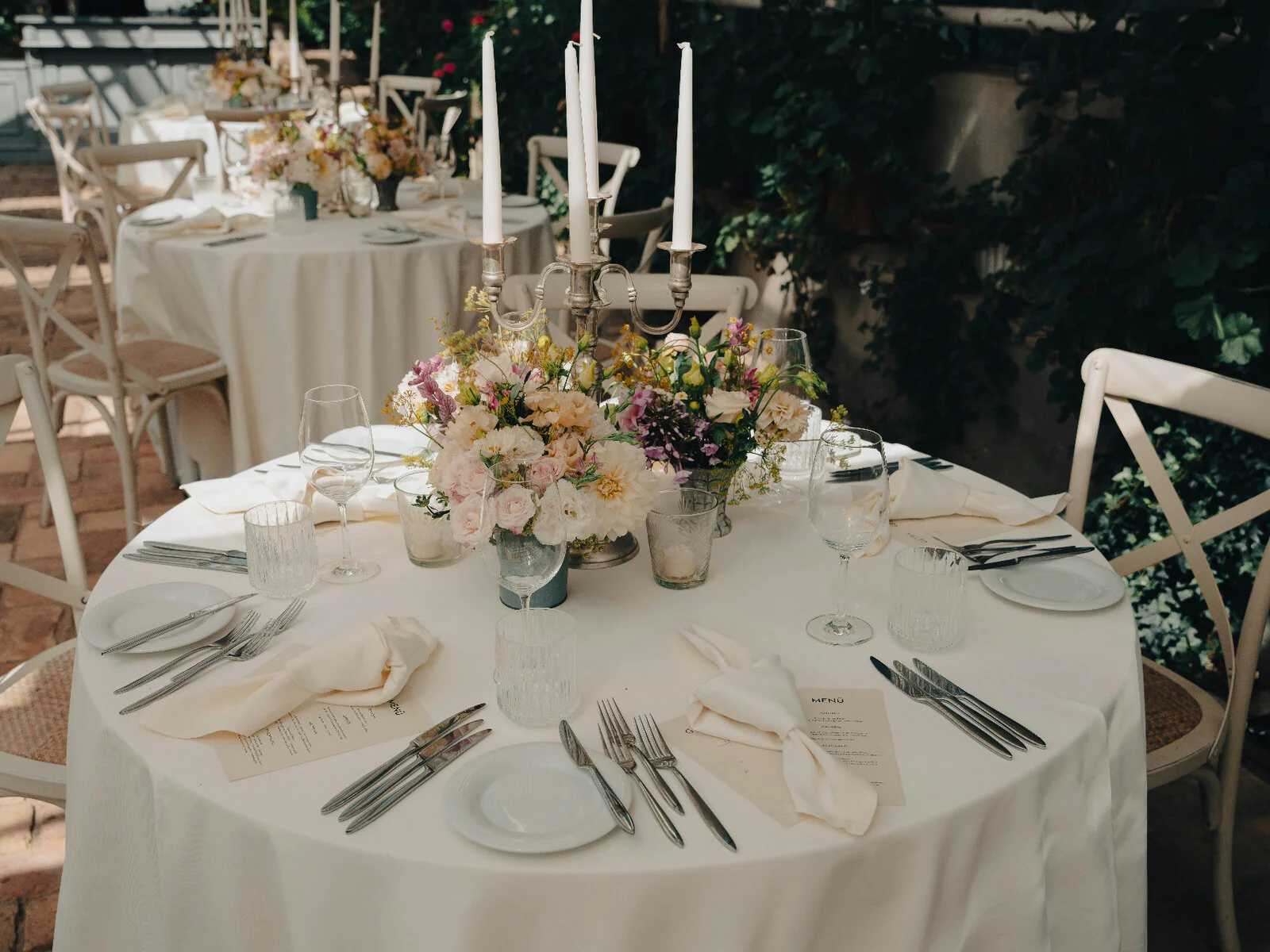
60 in rounds and 6 ft banquets are the workhorse SKUs.
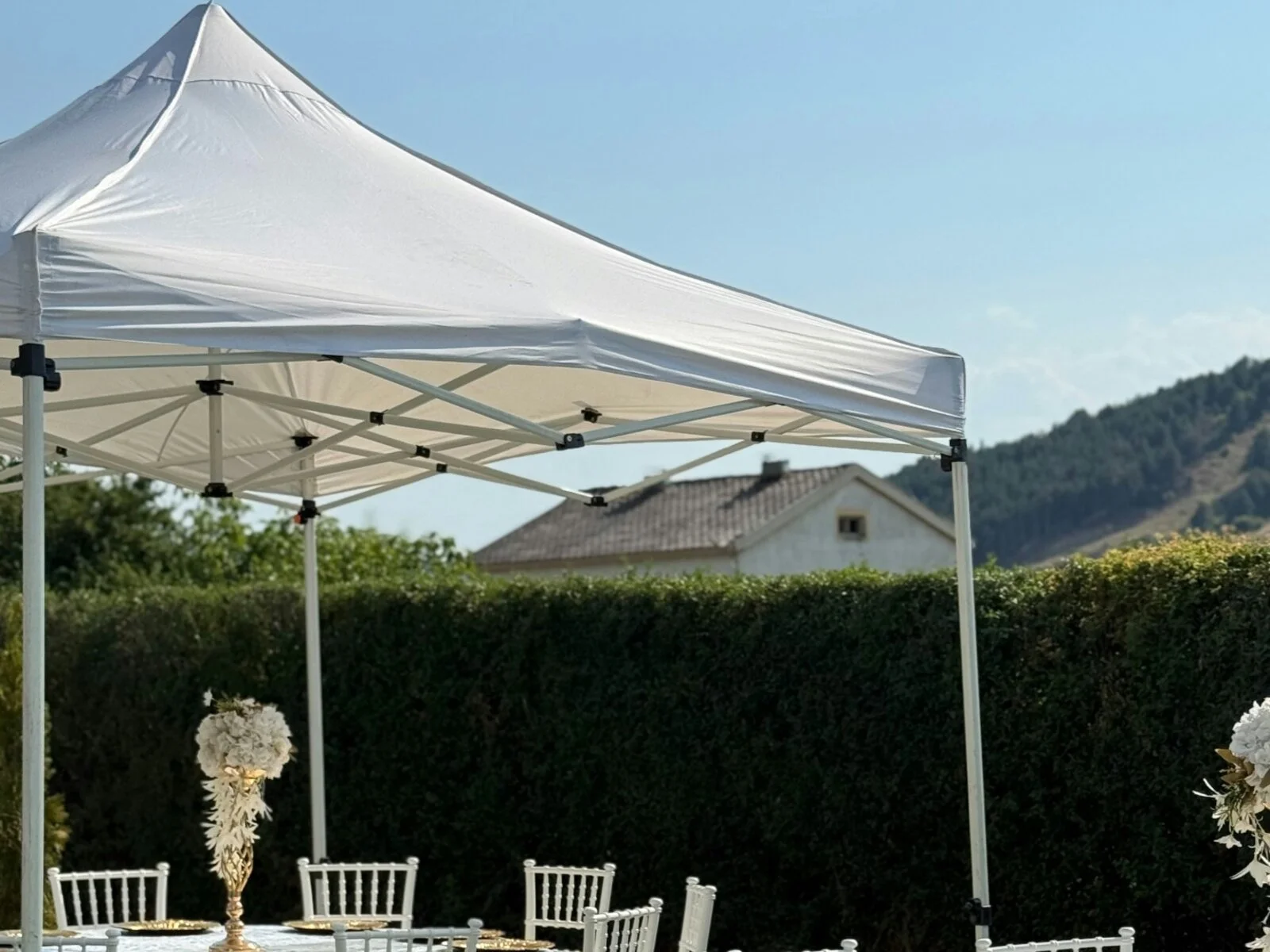
Sidewalls, weights, and string lights add $15 to $40 each.

Combo units with slides clear $350+ on weekends.
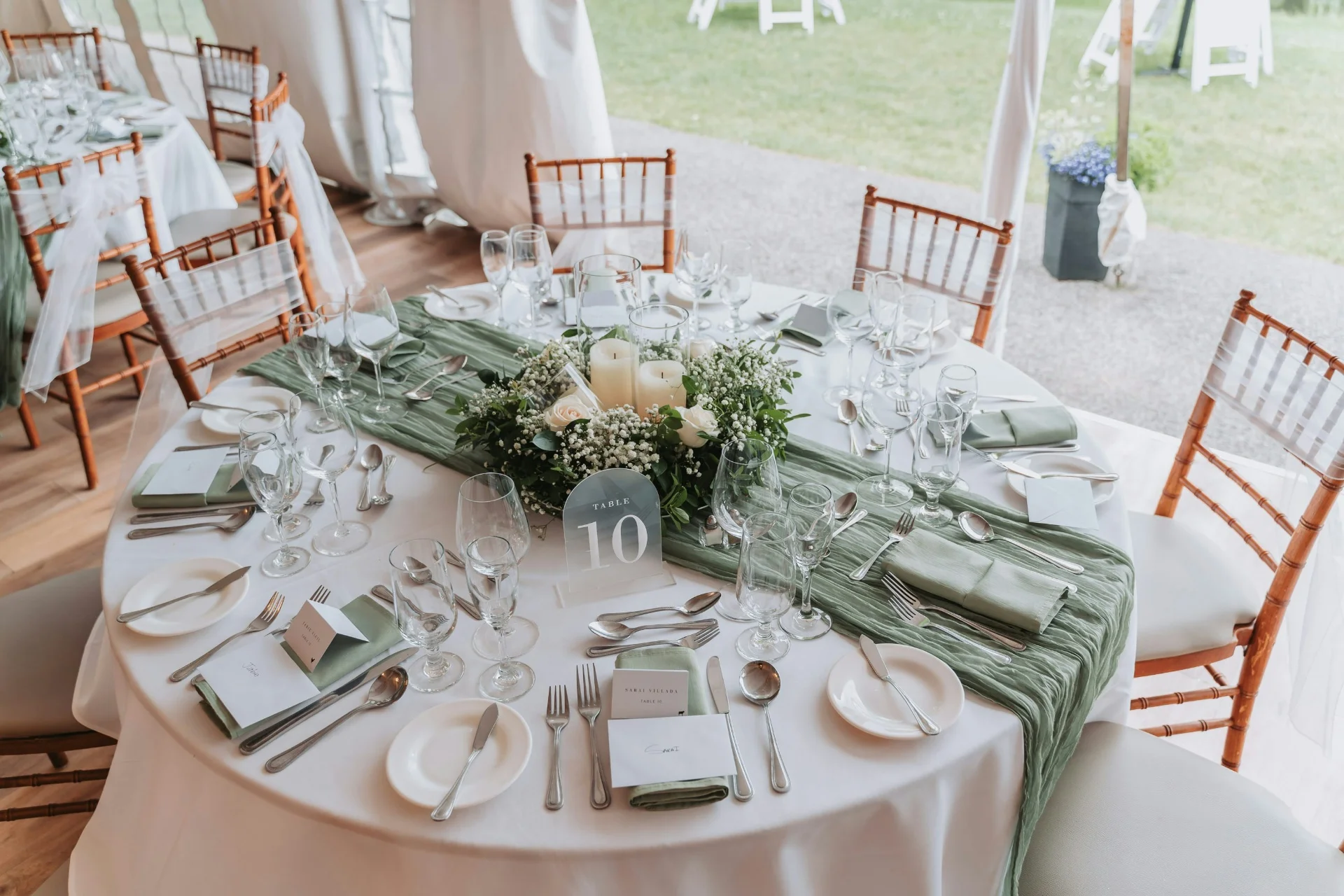
Premium fabrics (velvet, sequin) carry 2× to 3× markup.
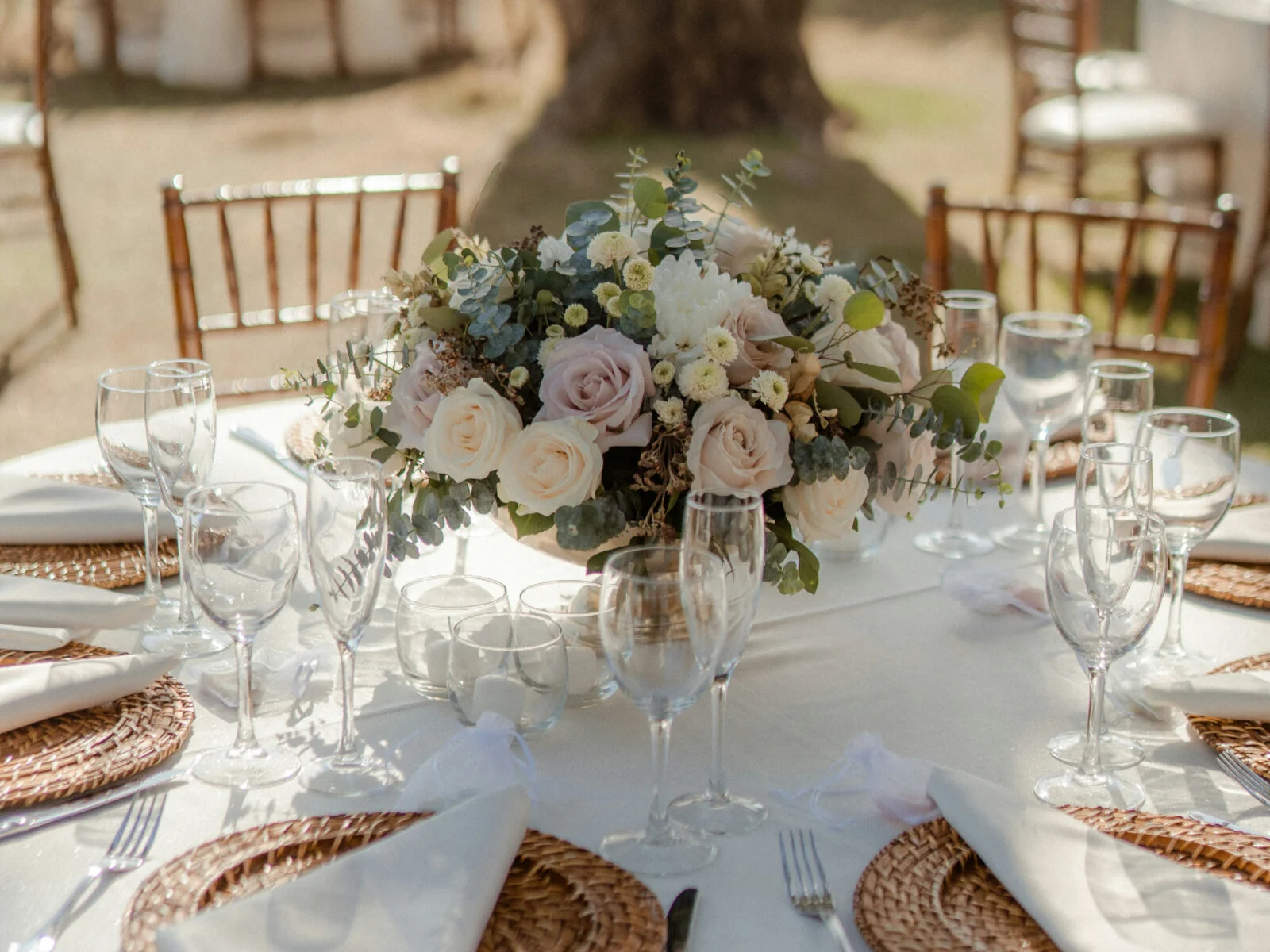
Chargers and specialty glassware add $1 to $3 each.
Indicative US ranges from Booqable customer pricing, public rate cards, and operator interviews, 2025–2026. Your market may sit above or below.
The single most common pricing question from new operators is what to charge when a customer keeps a tent over Friday, Saturday, and Sunday. The answer is industry-standard and deliberately simple: do not multiply your day rate by three. Use a curve.
Your base day rate. The reference point everything else discounts from.
Customers expect a multi-day discount. You still cover one delivery and one pickup.
The default party rental rhythm. Price it as a single bookable rate, not three day rates.
Common for corporate setups and multi-day festivals. Inventory is locked out longer, so the multiplier climbs.
Indicative US ranges from Booqable customer pricing, public rate cards, and operator interviews, 2025–2026. Your market may sit above or below.
Delivery and setup are where new operators lose the most money. The fix is not a smarter formula; it is breaking the fees out as visible line items so customers see what they are actually paying for, and you stop absorbing labor by accident.
Most operators charge a flat fee inside a 15 to 25 mile radius, then add per-mile beyond it. Round numbers ($75, $125, $175) read clearer on a quote than $1.85 per mile.
Bundle delivery with drop-only pricing, then quote setup as a labor add-on. A 10 × 10 pop-up tent takes one person about 15 minutes, so setup is usually folded into a $25 to $50 line rather than priced like a frame tent.
Stairs, long carries, after-hours delivery, weekend overtime, and difficult venues all deserve a named surcharge. Customers accept itemized fees; they push back on a single inflated total.
A chair rents the same whether it goes to a backyard or a 5th-floor walk-up. Keep item prices flat and let delivery carry the venue complexity.
Most party rental businesses set a $150 to $300 minimum on delivery jobs. Below that, the truck and labor cost eats the margin no matter how you price the items.
Packages are how party rental businesses turn $400 chair orders into $2,000 event bookings. The trap is treating them as a blanket discount: a flat 10% off everything looks tidy, but it gives away margin on the anchor and upsell items that would have booked at full price. Reserve the discount for the filler items that turn a single rental into a full setup.
Tents, bounce houses, dance floors. These are the reason the customer called. Keep them at the base rate and let everything else clip around them.
Tables, chairs, linens, basic dishware. Easy adds for the customer, easy yes for you. A 10 to 20 percent bundle discount turns a single anchor into a full setup.
Place settings, specialty linens, chargers, lounge furniture, lighting, sidewalls. Full price, but only shown after the anchor is locked in. Stacked together, these usually outweigh the anchor on the final invoice.
| 20 × 20 frame tent | Anchor | $325 |
| 16 resin folding chairs | Filler (–20%) | $40 |
| 3 banquet tables (2 round, 1 rectangular) | Filler (–20%) | $36 |
| 16 place settings (plate, glass, flatware) | Upsell | $128 |
| 4 premium linens + 16 charger plates | Upsell | $128 |
| String light package + 2 sidewalls | Upsell | $120 |
| Delivery, setup & teardown | Service | $250 |
| Total | $1,027 |
The anchor and the upsells hold their rate. The 20% off the filler costs about $19 in margin, but it is the nudge that turns a tent-and-chairs quote into a full table setting. The upsell stack ($376) ends up larger than the anchor, which is the point: the discount is small, the cart it unlocks is not.
These are the patterns we see most often when reviewing pricing with new Booqable customers. None of them are dramatic; they just compound over a season until the numbers stop working.
Their cost basis, utilization, and brand are not yours. Anchor on your own margin first, then sanity-check against the local market.
Soft goods (linens, glassware, decor) carry real loss. Build a 5 to 10 percent damage allowance into the rate rather than absorbing it in margin.
Even a quick 10 × 10 pop-up plus a few tables and linens is 45 minutes of two-person labor. Drop-only and full-service should be visibly different prices, or you will end up doing the labor for free.
For standard SKUs, no price means no inquiry. Most weekend customers want a number on the page before they will email.
A flat 10 percent off everything is the lazy version. Discount the items that actually need bundling (linens, decor) and protect rates on the anchors (tent, bouncer).
Operators argue about this constantly. Our take, based on Booqable conversion data: publish prices for standard SKUs, gate prices only for the genuinely custom work.
Standard chairs, tables, linens, bounce houses, and most decor pieces should show a price and a "Book now" button. If the SKU is custom (large tents, multi-day weddings, bespoke decor builds), a "Request a quote" flow is fine, but only after the visitor sees pricing on the items you do publish.
Higher conversion when standard SKUs show a price on the product page
Of "request a quote only" visitors bounce without contacting
Indicative US ranges from Booqable customer pricing, public rate cards, and operator interviews, 2025–2026. Your market may sit above or below.
The deeper logic ties back to the rest of this guide: if you've priced your SKUs deliberately, used a standard duration curve, and broken delivery out as a line item, you have nothing to hide. The price page becomes a sales tool, not a liability.For the full booking flow conversation: instant book versus quote request. See the starter guide section on booking flow, or read about event and party rental features in Booqable, which includes both flows out of the box.Once your numbers are dialed in, the next place margin leaks is the paperwork. See party rental agreements and contracts for the clauses that protect the price you just set.
The pricing questions we hear most often from new and growing party rental operators. Short answers, with links back to the deeper sections above.
Indicative US ranges: $1.50 to $3.00 per folding chair per day, $8 to $15 per table per day. Chiavari and crossback chairs sit at $4 to $7. Anchor on your own cost plus a damage allowance first, then sanity-check against the local market.
1.5× to 1.8× the day rate is the industry standard for a Friday-to-Monday weekend. A full week typically lands at 2.5× to 3.0×. Build the curve into your product once and let your booking software apply it automatically.
Flat delivery fee inside a 15 to 25 mile radius, then per-mile beyond. Quote setup and teardown separately as a labor line. Stairs, after-hours, and difficult venues get named surcharges. Set a $150 to $300 minimum order on delivery jobs.
10 to 20 percent on the filler items (chairs, tables, basic linens). Zero on the anchor (tent, bouncer, dance floor) and zero on premium upsells (specialty linens, lounge, lighting). A flat blanket discount gives margin away on items that did not need it.
Yes for everything you can instant-book. Showing a price on standard SKUs converts roughly a third better than a generic quote-request page. Reserve quote flow for genuinely custom work: large tents, multi-day weddings, bespoke event decor.
Use cost recovery as a floor: aim to earn back the purchase price in 8 to 12 rentals. Then check the local market on two or three competitors and position deliberately above or below based on your service level. Adjust after the first 10 bookings.
Get full access for 14 days and see how easy managing rentals can be.