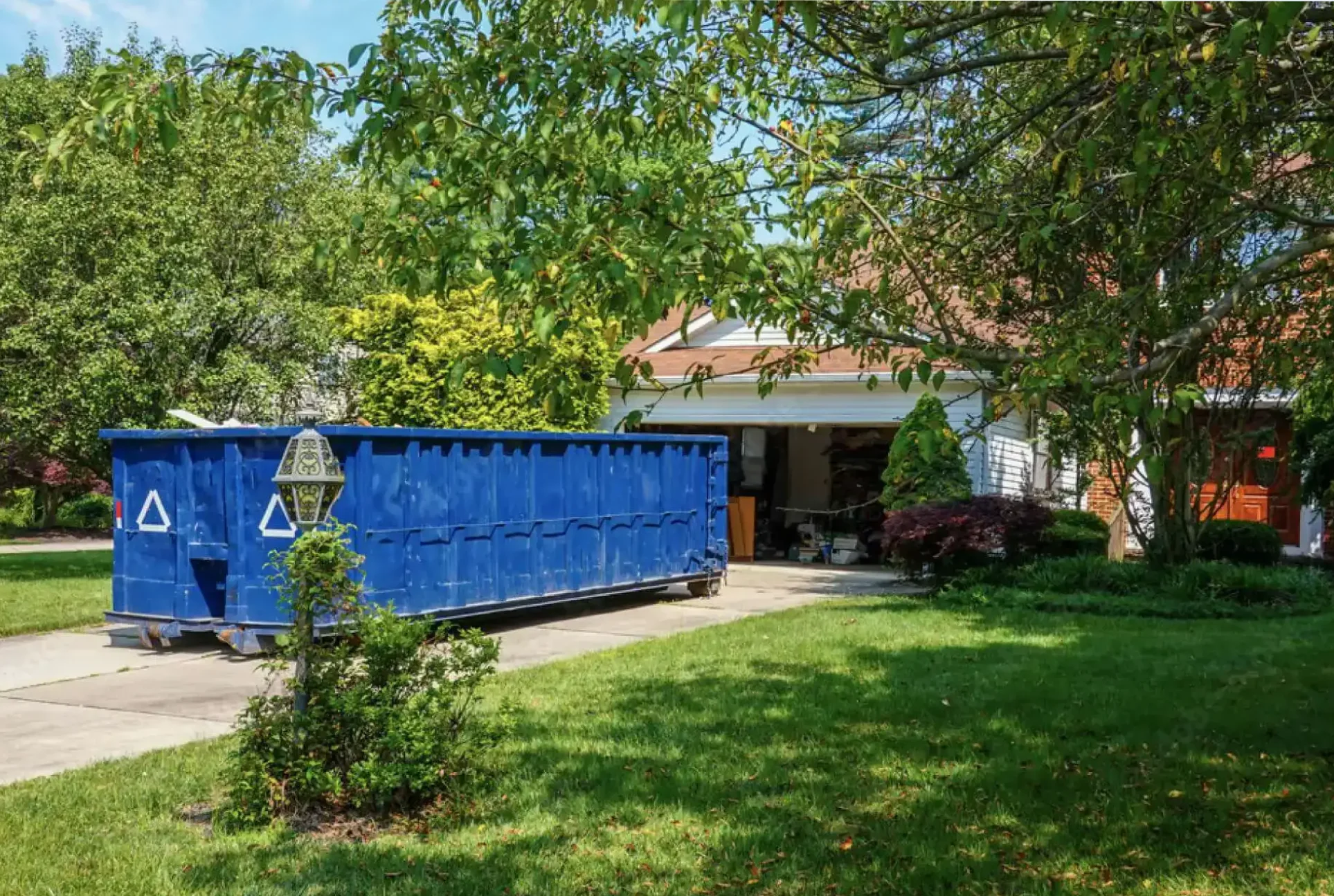
If you’re after a business built around an essential service that stays in demand year-round, a roll-off dumpster rental business is worth considering.
Every day, homeowners renovate kitchens, contractors demolish buildings, roofers replace shingles, landlords clear out rental properties, and businesses generate construction and commercial waste. All of those projects need somewhere for debris to go.
A roll-off dumpster rental company provides containers to customers for a set rental period, delivers them using a specialized roll-off truck, then collects the full container and transports the waste to a landfill, transfer station, or recycling facility.
While startup costs are significantly higher than many service businesses, the model offers recurring demand, durable assets, and opportunities to build long-term relationships with contractors and commercial customers.
How a dumpster rental business works
A roll-off dumpster rental business delivers large steel containers, commonly called roll-off dumpsters or roll-off containers, to customer sites using a roll-off truck equipped with either a cable or hook-lift system.
Customers typically keep the dumpster for several days while they complete a project before it is collected and the contents are taken to a landfill, transfer station, or recycling facility.
Unlike standard curbside garbage collection, these containers are designed for temporary projects involving large volumes of waste.
Typical customers include:
-
Homeowners renovating or cleaning out properties
-
Roofing contractors
-
General contractors
-
Demolition companies
-
Landscapers
-
Property managers
-
Commercial businesses
-
Municipal projects
Most successful operators generate repeat revenue from contractors who require dumpsters on multiple projects throughout the year.
Who can start a dumpster rental business?
You don’t need a lifetime of experience just to call yourself a dumpster rental company, and you don’t need a background in construction or waste management either. Some experience in that world helps, mostly because you’ll already have a feel for what customers typically load into dumpsters and how quickly they fill.
However, there is a lot of information out there from other operators who share exactly what to expect, from pricing to permits to what customers actually ask for.
What can give you a real edge is your area. If you live somewhere that doesn’t already have a dominant dumpster rental company, that’s a bonus most new operators don’t think to look for.
A lot of markets are saturated with a couple of big names carrying 20-yard roll-off containers but nobody’s offering anything smaller for the average homeowner doing a garage cleanout. Before you spend a dollar, look at what’s already out there in your area and where the gaps are.
The costs of starting a dumpster rental business
Unlike many businesses that can be started with minimal equipment, a roll-off dumpster company requires a significant upfront investment.
The roll-off truck is usually the single largest expense.
Roll-off truck
A roll-off truck is used to load, transport, and unload containers.
Typical costs include:
-
Used truck: $60,000 to $150,000
-
New truck: $180,000 to $300,000+
The exact price depends on:
-
Hook-lift or cable system
-
Age
-
Mileage
-
Hydraulic equipment
-
Lift capacity
Many operators finance their truck rather than purchasing it outright.
Roll-off dumpsters
Roll-off dumpsters commonly come in:
-
10-yard
-
15-yard
-
20-yard
-
30-yard
-
40-yard
Each container generally costs:
-
Used: $3,000 to $5,000
-
New: $4,500 to $8,000
Many successful operators start with one roll-off truck and four to eight containers, then expand their fleet as demand grows. This approach keeps the initial investment manageable while providing enough equipment to begin serving customers and building recurring business.
Other startup costs
You should also budget for:
-
Commercial auto insurance
-
General liability insurance
-
Yard or storage space
-
Business registration
-
DOT compliance where applicable
-
Fuel
-
Maintenance
-
Tarps
-
Safety equipment
-
Dispatch software
-
Website
-
Marketing
-
Working capital
A professionally equipped roll-off dumpster business often requires a six-figure investment to launch, although financing can reduce the upfront capital required.
Purchasing your equipment
Once you’ve registered your business and secured financing, you’ll need a roll-off truck and your first set of dumpsters. Most operators don’t launch with a large fleet. Instead, they begin with one truck and four to eight containers, then add more dumpsters as demand grows.
Rather than buying every dumpster size immediately, focus on the container sizes most commonly requested in your market. Expanding gradually lets you match your investment to customer demand while making the most of your existing truck.
For many operators, this means:
-
Two 20-yard dumpsters
-
Two 30-yard dumpsters
-
One or two 10-yard dumpsters
This mix covers most residential renovations, roofing projects, and small to medium contractor jobs while keeping your initial investment manageable.
Purchase commercial-grade containers from established manufacturers. They will withstand years of heavy use and generally retain their resale value better than lower-quality alternatives.
How much money can you actually make?
Revenue depends on your local market, utilization rate, disposal costs, and operating efficiency.
Typical rental pricing in many U.S. markets is summarized on a per week basis below:
-
10-yard: $300 to $450
-
20-yard: $400 to $550
-
30-yard: $500 to $700
-
40-yard: $600 to $850
Most rentals include:
-
Delivery
-
Pickup
-
A fixed rental period
-
An included weight allowance
Customers are charged additional fees if they exceed the included tonnage or dispose of prohibited materials.
Although rental revenue can be attractive, every job also includes operating expenses such as:
-
Landfill tipping fees
-
Fuel
-
Truck maintenance
-
Insurance
-
Driver wages
-
Equipment depreciation
-
Financing costs
-
Administrative expenses
Long-term profitability depends on keeping your fleet working consistently, planning efficient routes, and building long-term contractor relationships. Simply owning more dumpsters does not guarantee higher profits.
Steps to start a dumpster rental business
Conduct market research
Call around to your competitors, or better yet, request quotes from a few of them like a regular customer would. Find out what a 20-yard roll-off container costs in your area for a week, what the weight limit is before overage fees kick in, and how fast they can actually deliver and place the container. That last part matters more than people think, a contractor who needs a dumpster tomorrow morning will pay more for the company that can actually show up.
Create a business plan
You need a real plan before you buy anything. Figure out your target service radius, what sizes you’ll offer, what you’ll charge per size and per additional ton over the included limit, and how many dumpster rentals you need to break even in your first year. This plan is what keeps you focused and gives you a clear target to work toward.
Name your company
Pick a name that tells people exactly what you do and where you do it. Something like “Coastal Roll-Off” or “Midtown Dumpster Co.” works because it’s clear and it’s local. Avoid anything too clever that someone searching “dumpster rental near me” won’t connect to what you actually offer.
Register your business
Register your business with your state, usually as an LLC, and check with your city or county about permits. A lot of areas require a permit just to place a dumpster on a public street, and some require your equipment to be weighed and registered separately since it’s classified for commercial hauling use.
Purchase your fleet
Once you’ve settled on a name and gotten your permits sorted, it’s time to buy the containers you’ll actually rent out. Start with a small, practical mix rather than trying to cover every size right away, since it’s easier to add sizes once you know what your area is actually calling for.
Stick with established manufacturers like Wastequip, Galbreath, or Amrep, since they build to a consistent spec, which matters when a customer asks what your weight limits are. Buying commercial-grade containers from the start also gives customers confidence in what they’re renting and holds up better under repeat use.
Build a dumpster rental website
A website is one of the easiest wins you can set up before your first delivery. Customers, especially contractors booking on a tight schedule, like being able to see what sizes you offer and lock in a delivery date without picking up the phone.
You don’t need to build this from scratch or hire a developer. Booqable lets you set up a rental website with a ready-made template, so you can organize your containers into collections by size (think “10-yard,” “20-yard,” “30-yard”) with clear pricing and photos for each. Customers can check what’s available, pick a delivery window, and pay a deposit upfront, all before you’ve even loaded the truck.
Market your business
Get your business listed on Google right away, since most contractors and homeowners search “dumpster rental” the day they need one, not weeks in advance. Beyond that, a truck with your company name and phone number painted on the side does more advertising while it’s driving down the highway than most paid ads will.
Choose the right rental software
A lot of new operators put this off, figuring a notebook and a phone will do until things get “big enough” to justify software. But setting up good systems early is actually what helps you get there faster, not something you wait for.
Booqable is built for rental businesses like this one, and it does a lot of the heavy lifting for you: it tracks which dumpsters are out, when each one is due back, and what’s available for the next delivery, so you’re not relying on memory or a whiteboard to avoid double-booking the same dumpster for two jobs on the same day.
It also cuts down on training time for any staff you bring on, since everything from booking to deposits to pickup reminders lives in one place instead of scattered across texts and sticky notes. That means less time explaining your process to a new hire and fewer costly mistakes while they’re learning the ropes.
As it handles deposits and sends automatic confirmation and reminder emails on its own, you get hours back in your week that used to go toward manual scheduling and follow-up calls.
The website you set up early on grows right alongside you too. As you add container sizes, you can add new collections to your online store, so customers always see an accurate, up-to-date fleet without you having to rebuild anything.
Tips on scaling your rental business
Reinvest early profits
As bookings pick up, put your first profits back into the business rather than pulling them out right away. Even a modest amount reinvested each month adds up to more equipment, more bookings, and more room to grow.
Target contractors, not just homeowners
A single roofing or remodeling contractor who calls you for every job can fill your schedule more reliably than a dozen one-time homeowner rentals. Once a contractor trusts you to show up on time, they’ll keep calling.
Add a smaller container size if you don’t have one yet
A lot of operators skip the 10-yard size because it’s a smaller payday, but it opens the door to homeowner cleanouts that the bigger contractors never call you for.
Storage, deliveries, and other logistics
A lot of people picture this business as just dropping off a box and picking it up later. In reality, routing and scheduling take up most of your actual working hours, and getting good at that part is where the real momentum builds.
Efficient operations are one of the biggest factors that separate profitable companies from struggling ones.
Storage
You’ll need a secure commercial yard large enough to store both empty dumpsters and your roll-off truck.
The yard should provide enough space to load and unload containers safely while leaving room for future fleet expansion.
Deliveries
Delivery routes should be planned to reduce travel time and fuel costs.
Grouping deliveries and pickups in the same area can significantly improve profitability.
Placement
Drivers should always consider:
-
Overhead power lines
-
Tree branches
-
Driveway strength
-
Soft ground
-
Sloping surfaces
-
Vehicle access
-
Local parking restrictions
Incorrect placement can damage property or make collection difficult.
Collection
Before transporting a full dumpster, drivers should confirm that:
-
The load is evenly distributed
-
Debris does not extend above the container walls
-
No prohibited materials are present
-
The load complies with road weight limits
-
The container is properly tarped where required
Overweight containers can result in landfill surcharges, transport fines, or safety risks.
The legal side of things
Most roll-off dumpster rental operators register as an LLC and carry general liability insurance along with commercial auto insurance, since this business involves much bigger vehicles and equipment than a standard pickup.
Cities often require a right-of-way permit if the container sits on a public street rather than a private driveway, and some have rules about how long a container can sit in one spot before it needs to be moved. Landfills and transfer stations may also ask for proof of your business registration before they’ll open a commercial account for you.
This content is for informational purposes only and does not constitute legal advice. You should consult with a qualified legal professional to make sure your business complies with local laws and regulations.
How to get your first customers
Google Business Profile and local search
Most people searching for a dumpster rental type exactly that into Google, so a filled-out business profile with your service area, sizes, and phone number matters more than almost anything else early on.
Direct outreach to contractors
Drive around job sites in your area and leave a card, or call general contractors directly and offer them a rate for repeat business. Contractors talk to each other, so one good relationship can turn into several more.
Post in local Facebook groups
Homeowners doing clean-outs or small renovation projects often ask their neighbors for recommendations before they search online at all. Being the name that comes up in those threads is free advertising.
A clean, well-marked truck driving through neighborhoods and job sites all day is a moving billboard. Don’t skip the vinyl lettering, it’s one of the cheapest and most effective things you can spend money on.
Building a business that lasts
A roll-off dumpster rental business is still one of the more overlooked businesses someone can start in 2026, with real earning potential, low competition compared to more visible side hustles, and equipment that keeps earning long after it’s paid for itself.
The people who do well at this aren’t the ones who bought the most dumpsters on day one. They’re the ones who bought the right roll-off container mix for their area, priced their rentals clearly, and put a good system in place early so growth never outpaces what they can actually manage. If you’re serious about how to start a dumpster rental business the right way, that groundwork is what makes the difference.