30 to 45%
Deep, cheap stock
Tables, barriers, hand tools. Capital is small, so idle days are cheap. Compete on availability and breadth.
Work out the lowest rate you can accept, see how much pricing power you really have, and set clear rules for duration, delivery and damage, so you are not deciding the price in every conversation.
Good rental pricing is not about finding one perfect daily rate. It is about knowing your floor, understanding your pricing power, and building rules for duration, risk, delivery and demand.The usual advice is to check three competitors and land somewhere in the middle. That tells you nothing about what your stock cost you, how often it goes out, or what it costs you to hand it over. You buy an item once and earn it back one hire at a time, so start with the item. Check competitors afterwards, to sanity-check the number you land on. Do not start there.The rest of this playbook builds one pricing model in order: understand your economics, understand your pricing power, build the structure, then make sure you actually realise those prices. We use the same city e-bike in every step, so you can see one rate card come together from start to finish. If you rent out party and event gear, the party rental pricing playbook covers that side in more detail.
Every category has its own habits
Tools and machinery go out by the week. Camera hire treats a week as three days. Consumers expect prices with VAT included, trade expects them without. Follow the convention in your market, then price inside it.
Every item has a break-even day rate. Add up what it costs you from purchase to resale, divide by the days it is actually out on hire, and you have the number no quote or discount should ever go under.Five numbers go into that sum. The last one catches most people out.
You reclaim the VAT, so it never belongs in the calculation. Work with the net price, including delivery and anything you had to add before the item could go out on hire.
A trailer runs eight years, a bouncy castle six seasons, a cinema body four before the resale market moves on. Guess too long a life and your rate is too low from day one.
Servicing, statutory inspections, insurance, storage space, finance interest, cleaning and turnaround labour. Storage is the one people forget and it is often the second largest line.
Trailers, machinery and vans hold value. Inflatables and anything close to a consumable do not. Only subtract a residual you would actually bet on.
This is the line that changes everything. An item can be available for three hundred days and still only go out on eighty of them, and it can only recover its costs on the days someone actually pays for it. Count paid rental days, not shelf time.
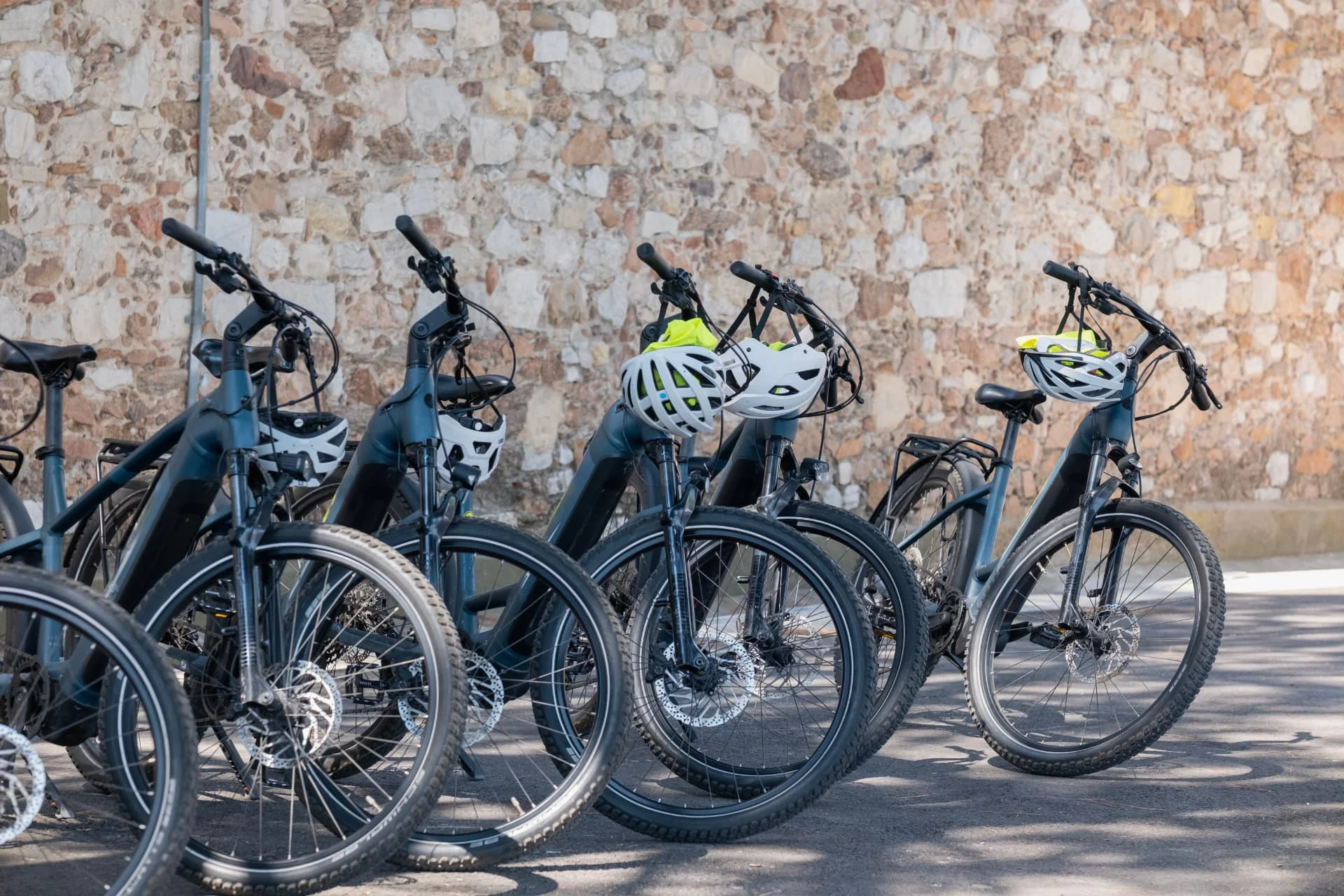
A rental e-bike is not a consumer bike. It needs a sturdier frame, it gets ridden hard, and somewhere in year three it usually wants a new battery. €1,800 to buy and €300 a year to keep on the road is a realistic picture, and 100 paid days a season is a normal result for a city fleet.€6.75 covers the asset and nothing else. Your rent, your software, your own hours, the counter staff and your profit all still have to come out of the rate on top of it. That is why this e-bike ends up at €28 a day, and every chapter from here adjusts that number for demand, duration, risk, delivery, season and what else goes in the basket with it.
Why the denominator matters more than the costs
Halve your paid rental days and you double your break-even. The same e-bike at 200 paid days over four seasons has to earn €13.50 a day before it breaks even. This is the whole reason utilisation belongs in a pricing conversation and not just in an operations report.
Utilisation tells you when you have room to raise prices. The market tells you how much room you have.Your costs set the floor. Utilisation is the demand signal on top of it: rent an item out most weeks and there is room to move, rent it a handful of times a year and the rate has to carry the empty days too. It is not a formula where 70% automatically means a certain markup. It is a prompt to test.The behaviour to build in is simple. If an item repeatedly sells out while comparable stock sits available elsewhere in your area, price is the first thing to test, before you buy another unit. Adding stock costs capital. Adding €4 to the day rate costs nothing and tells you within a month whether the demand was about price at all.
Tables, barriers, hand tools. Capital is small, so idle days are cheap. Compete on availability and breadth.
Trailers, mixers, small machinery, e-bikes. The bread and butter, and the category where a week-long hire beats three separate day hires every time.
Cinema cameras, larger machinery, specialist AV. Anything over €10,000 needs to be earning most weeks or it belongs on a sub-hire arrangement instead of your balance sheet.
The e-bike goes out on roughly one day in three across the year, which is your signal to test a higher summer rate rather than leave the card alone for twelve months. Track this per item, never as a fleet average. A fleet average hides the handful of products that are paying for all the rest. Booqable's reporting shows rental days and revenue per product, which is the fastest way to spot the stock that should be repriced, retired or replaced.
There is no universal percentage of purchase price per day. Run the same method across two very different items and the reason becomes obvious.
The excavator costs around fourteen times as much to buy, but its day rate is only around six times higher. Utilisation, maintenance, useful life and willingness to pay all change the answer, and they pull in different directions: the excavator earns on far fewer days and costs far more to keep running, while the e-bike is cheaper to own but competes against a market that knows roughly what a bike day costs.So copy the method, not the numbers. Anyone offering you a fixed percentage of purchase price has skipped both the maintenance line and the demand side.
A longer hire costs you less to service: one delivery, one collection, one clean, one set of paperwork. Decide up front what an extra day is worth and long hires become the easiest yes you offer.
The city e-bike from chapter 02, priced across every duration you actually sell. Set once, published, no negotiation needed.
The effective daily rate falls, but revenue per booking rises while the work around the booking barely changes. A two-week hire at €200 is worth more than seven single days at €28 that each need a handover, a check and a clean. A lower daily rate on a week is not a discount. It is a different product, so give it its own price.Build the curve in advance rather than deciding discounts during every customer conversation. That is what makes pricing consistent, and it removes the negotiation before it starts. Two rules keep the curve honest: never let the weekly rate drop below the point where a customer would be better off hiring twice, and never discount the item that is scarce in peak season.
The item is only part of what you sell. The rest is the risk you carry and the job you do to get the item there and back.RiskDeposits and damage protection are economic decisions, not paperwork. The question underneath all of it is how much rental risk your business absorbs, and how much the customer carries. Answer that per category and the right option is usually obvious. A deposit, a card hold, an optional damage protection charge and a requirement to show insurance are four ways to solve the same problem, and which one is normal, or even allowed, differs by country and by insurer.There is no single right structure. What matters is that you price the risk up front, instead of finding out what it costs after something comes back broken. Whatever you choose, publish the excess: stating what the customer pays in the worst case costs you nothing, and an unnamed excess is the fastest route to a chargeback. The wording that makes it enforceable belongs in your hire terms.Price delivery on the job it creates, not on the kilometresDistance is the easiest part of a delivery to measure and the smallest part of what it costs. Two jobs of similar length can differ by an hour of paid time. Compare these two.
The shorter delivery costs more, because kilometres are only one part of the job. What you are actually paying for is employee time, loading and unloading, fuel, parking, tolls, low-emission or city-access charges, waiting time and difficult destinations. Price cost to serve, not cost per kilometre.In practice that means kilometre bands as a base, driver time on its own line billed in half hours after a stated grace period, and a named difficulty charge for anything beyond kerbside. Set a minimum order on delivered jobs too, somewhere around €150 to €250 depending on your area, because below that the delivery costs more than the hire earns.
Seasonality is utilisation with a calendar attached. When demand repeatedly outruns supply in the same weeks every year, that is a pricing signal, not a stock signal.A kayak rents for €40 in April. In July it is booked 85% of available days and repeatedly sells out at weekends. Raising the July rate to €48 will often do more for profit than immediately buying another kayak, and it costs nothing to try. The rule that follows is the same one from the utilisation chapter: when seasonal utilisation is consistently high, test price before expanding inventory.The e-bike works the same way. Almost nothing moves in February and July runs close to full, so the annual average sets the base rate and the summer months carry a named seasonal rate on top. Every category has its own calendar, camera gear follows production schedules rather than weather, and trailers peak around moving season, so the pattern matters more than the month.
Uplift rather than discount
Set your card at the peak rate and offer a named off-season deal, instead of setting a low rate and trying to raise it in June. Customers accept a seasonal rate. They resent a rise.
The item people search for is rarely the item that makes the money. The margin sits in everything that has to go with it.An e-bike needs a helmet, a lock, panniers and often a child seat. A trailer needs straps and a spare wheel. Sold together, those accessories carry a healthy rate and almost no extra handling. The difference between a bundle that works and one that costs you money is whether the main item keeps its price.
"Day out" bundle €32. You have discounted the one item the customer had already decided to book.
Total booking €38. The main item keeps its price and the extras are easy to say yes to.
Use bundles to increase the value of the booking, not to make the product customers already wanted cheaper. Build them as bundles in your catalogue so availability is checked across the whole bundle at once, and if you must discount inside a bundle, discount the accessories and leave the main item alone.
Your price list says €100 a day. After manual discounts, negotiated deals, promotions and overrides, customers actually pay an average of €84. Your real rate is €84.List rate and realised rate are two different numbers, and only one of them pays your bills. This is why businesses can raise prices on paper and see revenue barely move: the increase is absorbed before it reaches the invoice.
The deal one customer got in 2022 that quietly became their standing rate.
Blanket percentages applied to customers who never asked for them.
Rates typed over at the counter, usually to close a booking that would have closed anyway.
Seasonal offers that outlive the season they were built for.
Delivery, cleaning and late-return fees dropped in the moment and never recorded.
Track what customers actually pay, per product, not only what is written in your price list. If the gap between list and realised rate is wide, the fix is rarely another price rise. It is fewer places where the price can quietly change.
Their rate is not market data.
A published curve does the same job without the margin loss.
Rules scale. Conversations do not.
A rate card that has not moved in three years has become a discount card.
The number on the invoice is the only one that counts.
Pricing is not a one-time exercise. It is a short meeting, four times a year, with your own numbers in front of you.Every quarter, put these on the table, per product:
Then ask three questions. Which items are too cheap? Which are too expensive? And which do not need a different number at all, just a better structure around duration, delivery or add-ons?Change deliberately. Announce rises before peak rather than during it, keep a note of what you changed and what happened afterwards, and after two or three quarters your own notes will tell you more than any benchmark table. Review frequently, change deliberately: what you want to avoid is ignoring pricing for three years and then raising everything at once.If you rent out party and event equipment, two more playbooks build on this one: the party rental start-up playbook covers what to buy first, and pricing party rentals applies the same method to tents, tables, chairs and weekend events.
Start with your total cost of ownership, including purchase price, maintenance, repairs, storage, and other running costs. Then estimate how many paid rental days you expect over the equipment's useful life. Your day rate should recover those costs, cover overhead, and leave room for profit.
Look at both demand and profitability. If an item is booked out regularly but generates little margin, your price may be too low. Compare your rates with local competitors, track utilisation, and check whether each rental contributes enough after maintenance, labour, payment fees, and other costs.
Longer rentals usually have a lower effective daily rate because they involve fewer handovers, less cleaning, and less administration per rental day. Instead of multiplying your daily rate by seven, create separate multi-day and weekly rates that still protect your margin.
A deposit can help protect you against damage, loss, or late returns, especially for higher-value equipment. The right amount depends on the value and risk of the item. Keep the deposit separate from the rental price so customers can clearly see what they are paying for the rental itself.
Base delivery and collection charges on the real cost of providing the service, including travel time, distance, fuel, vehicle costs, and staff time. You can use a fixed fee within a local area, distance-based pricing, or different delivery zones. Review these charges regularly as your costs change.
Get full access for 14 days and see how easy managing rentals can be.