





Starting a tool rental business in 2026 is less about owning the most tools and more about owning the right tools for your market at the right time and price. Customers rent tools because they need something specific for a project, often within a tight timeframe. They want clear availability, reliable equipment, and confidence that what they book will work.
The decisions you make early around inventory, pricing, and daily operations will shape how quickly you grow and how stable your revenue becomes. This guide focuses on the practical mechanics of running a profitable tool rental business, not generic startup advice.
Define your tool rental model first
Before purchasing inventory, decide who you are building for. Tool rental businesses vary significantly depending on the customer type.
DIY and homeowner-focused model
A homeowner-focused rental business typically revolves around lower-priced tools, short rental durations, and higher transaction volume. These customers are often working on weekend renovation or landscaping projects. They are more price-sensitive and usually need simple guidance on how to use the equipment.
For example, a suburban rental store may focus on pressure washers, tile saws, floor sanders, and lawn aerators. These tools rent frequently on weekends and during peak renovation seasons. Success in this model depends on smooth pickup and return processes and competitive daily pricing.
Contractor and professional-focused model
Contractor-focused operations center around higher-value equipment, longer rental durations, and repeat relationships. These customers prioritize reliability and availability over small price differences.
A contractor renting scaffolding, a concrete saw, or a Kubota mini excavator is often working on a job with deadlines. If the equipment fails, the entire project can be delayed. Because of this, professional customers are willing to pay more for well-maintained equipment and dependable service.
This model requires strong maintenance systems and possibly backup units for high-demand equipment, but it can result in more predictable revenue and repeat business.
Specialty and niche tools
Some businesses focus on specialty equipment with limited local competition. Examples include advanced measuring equipment, flooring refinishing systems, or compact excavation equipment.
A rental company that invests in a digger may face less competition but must ensure consistent demand to justify the investment. Specialty positioning allows for higher rates, but marketing and local visibility become more important.
The key decision is whether you are optimizing for high transaction volume with homeowners or dependable, higher-value rentals with professionals. This choice influences your inventory mix, pricing, and operations.
Inventory strategy: What to buy and why
A strong inventory strategy is what separates a busy rental business from one with idle equipment. Tools differ significantly in rental frequency, maintenance needs, and profit margins.
High-frequency, lower-ticket tools
These tools rent often but generate smaller amounts per transaction. Examples include drills, sanders, circular saws, and basic landscaping tools.
They create consistent cash flow and help attract repeat customers. If you notice that competitors frequently run out of cordless drills or pressure washers, adding more units of those items may be more profitable than expanding into entirely new categories.
High-frequency tools require careful tracking because small maintenance issues can quickly multiply when items are constantly in circulation.
Low-frequency, higher-value equipment
Some equipment rents less frequently but generates higher revenue per booking. Examples include concrete saws, scaffolding systems, plate compactors, and compact excavation machinery.
These items often need longer rental periods to justify ownership. If you invest in high-value equipment, you must monitor booking patterns carefully. If it sits idle for long stretches, it may not be the right fit for your market.
Before purchasing expensive equipment, analyze how often similar items are rented in your area and whether local contractors rely on rental services.
Depth versus breadth
New rental operators often buy one of every tool category. In practice, depth usually outperforms breadth in the early stages.
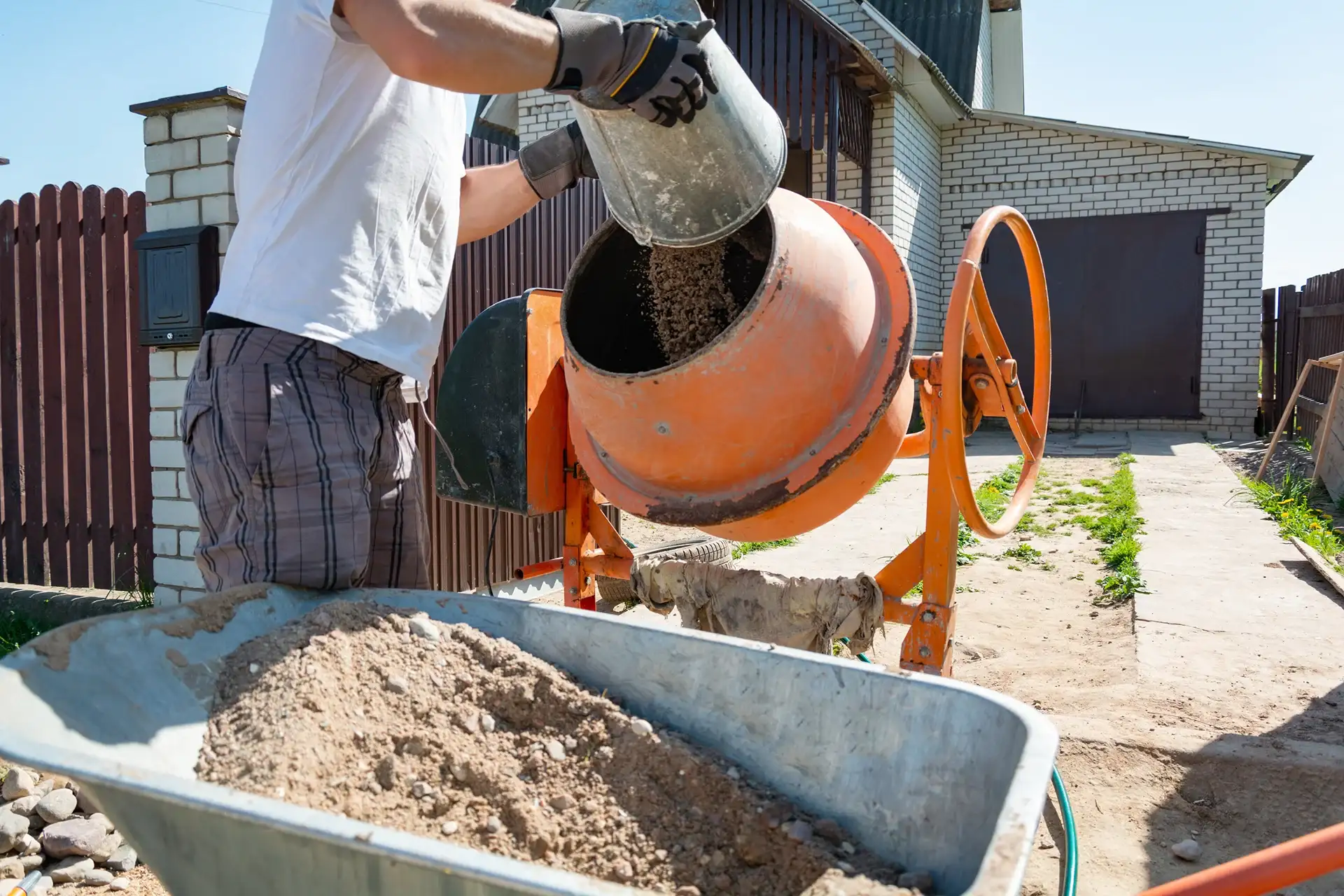
If concrete mixers are consistently in demand, owning multiple units reduces lost bookings. Having five high-demand tools is often more profitable than having one of five rarely requested tools.
Accessory bundling
Accessories can significantly increase revenue per transaction. Drill bits, saw blades, sanding pads, batteries, and safety gear are often needed alongside the primary tool.
For example, a contractor renting a concrete saw will likely need replacement blades. Including accessory options directly during booking increases order value and simplifies the customer experience.
Pricing in the real world
There is no universal pricing formula that guarantees profitability. While calculating your costs helps establish a minimum rate, actual pricing is shaped by your local market.
Rental rates are influenced by what nearby competitors charge, how quickly customers need the tool for their project, and how long they plan to keep it. A customer who needs a tool today to keep a project moving may accept a slightly higher price than someone planning a future renovation.
Start with local benchmarking
Research competitors within your service area. Review their daily, weekend, and weekly rates for similar equipment. This provides a realistic starting range.
If most competitors rent a concrete saw for $65 per day, your pricing must stay within a reasonable range unless you offer added value such as delivery or newer equipment.
Use tiered duration pricing
Most successful rental businesses use structured pricing tiers. A daily rate establishes the baseline. A weekend rate often costs roughly two to two and a half times the daily rate. Weekly rates typically offer a discount compared to paying the daily rate seven times.
Tiered pricing encourages longer bookings, which increases utilization and reduces administrative work per rental.
Adjust based on demand
Monitor utilization rates. If certain tools are booked nearly every weekend, you may be able to increase rates slightly. If others sit unused for long periods, either pricing or demand assumptions may need to change.
Data from your booking system should guide pricing adjustments rather than guesswork.
Operations essentials
Operations are where many tool rental businesses either build a strong reputation or struggle with recurring problems.
Check-in and check-out process
Every tool should go through a consistent inspection process when leaving and returning. This includes testing basic functionality, checking for visible damage, and confirming that all accessories are included.
Documenting condition with notes or photos protects your business in case of disputes and reassures customers that equipment is professionally maintained.
Damage and wear policies
Clearly explain what qualifies as normal wear versus misuse. Outline deposit requirements and optional damage waivers in simple language.
Professional customers appreciate transparency. Clear policies reduce friction and prevent misunderstandings at return time.
Cleaning and preparation routines
After every rental, clean equipment thoroughly and inspect critical components such as blades, belts, batteries, and safety features. Address minor issues immediately rather than delaying repairs.
A tool that is ready to rent at any time increases your ability to accept last-minute bookings.
Staff training
Even small teams need structured training. Staff should understand how each major tool operates, how to perform inspections, and how to communicate safety guidance.
For example, explaining safe operation procedures for compact excavation equipment helps prevent accidents and reinforces your credibility.
Marketing and sales that actually work
Tool rental marketing is highly local and intent-driven. Customers typically search online when they are ready to rent.
Local search visibility
Appearing in searches such as “tool rental near me” or “concrete saw rental in [city]” is critical. A well-optimized Google Business Profile, clear service area information, and equipment-specific landing pages drive qualified traffic.
For a deeper breakdown of how to improve local visibility, see SEO For Rental Businesses, our complete guide to getting found locally.
Partnerships
Build relationships with hardware stores, lumber yards, contractors, and property managers. A hardware store that does not stock heavy equipment may refer customers to your rental business.
These partnerships create steady referral traffic without heavy advertising costs.
Pickup and delivery options
Homeowners often prefer convenient pickup. Contractors frequently prefer delivery directly to job sites. Offering delivery for larger equipment increases average order value and expands your service radius.
A strong example of focused equipment rental growth is 007 Diggers, which illustrates how a young entrepreneur targets the right equipment with local demand.
This story illustrates how targeting the right equipment and local demand can create strong early traction for a newly launched rental business.
How to test demand without over-investing
You do not need a full warehouse of tools on day one. Testing demand before expanding inventory reduces financial risk.
You can list a small selection of core tools online and monitor inquiry volume. If specific tools are repeatedly requested, expand inventory in those categories first.
You can also accept reservations before purchasing additional units. If a particular piece of equipment is frequently unavailable due to bookings, that is a strong signal to add more units.
Let booking data guide expansion rather than assumptions.
Technology that supports growth
Manual tracking may work at first, but it becomes difficult as bookings increase.
Rental management software allows you to track availability in real time, prevent double bookings, manage deposits, log inspections, and accept online reservations. Having accurate utilization data makes inventory and pricing decisions more informed
Building a sustainable tool rental business in 2026
The tool rental industry continues to show steady demand, but success depends on alignment between your inventory, your target customer, and your local market.
Focus on clear positioning, smart inventory depth, competitive pricing, disciplined operations, and strong local visibility. Monitor your booking data, maintain equipment consistently, and adjust based on real demand.
With the right systems in place, a tool rental business can grow steadily and profitably in 2026 and beyond.