Most advice on how to start a party rental business makes it sound expensive. You are told you need a warehouse, a box truck, thousands of dollars in inventory, and years of experience before you can book your first event.
That is simply not true anymore.
In 2026, you can start a party rental business with a lean setup, a single package of equipment, and a clear reinvestment plan. You can even run the whole operation from home, using the car you already own and storage space you already have.
If you are researching how to start a party rental business, the good news is you can begin small, stay profitable, and scale faster than most traditional business models.
Rental industry expert Lee Jones recently shared his step-by-step strategy for launching a party rental business with just $500. This guide breaks that approach down into a practical, realistic plan you can actually follow, without taking on unnecessary risk.
The core idea: offer a complete “party in a box”
When people ask how much to start a party rental business, they often expect the answer to involve loans or large upfront investments. But if you focus on a high-demand, entry-level niche, you can get started for roughly $500.
The biggest mistake beginners make is buying random items based on personal taste instead of customer needs. A few linens here, a popcorn machine there, maybe a bounce house that requires a trailer to transport. Suddenly, you have spent your budget and still do not have a complete offering.
The truth is, once you understand how to start a party rental business the right way, it becomes less about having lots of inventory and more about offering the right package.
Instead, this strategy focuses on one simple idea: sell a complete solution.
Rather than renting individual items, you offer a small but fully functional party setup, everything someone needs to host a backyard gathering. That makes your business easier to market, easier to operate, and easier for customers to say yes to.
The $500 starter package (a “party in a box”)
Lee’s recommended starter package is designed to host a standard backyard party for around 18 people. It is compact, affordable, and easy to transport.
Folding chairs (18 total – approx. $230)
Standard poly folding chairs are lightweight, stack neatly, and hold up well outdoors. Eighteen chairs is intentional because it pairs perfectly with three rectangular tables, seating six people per table.
Folding tables (3 total – approx. $150)
Six-foot folding tables are the sweet spot. They are large enough for food and seating but short enough to fit in most SUVs or minivans with the seats folded down. Eight-foot tables often require a trailer, which adds cost and complexity too early.
Pop-up tent (1 total – approx. $145)
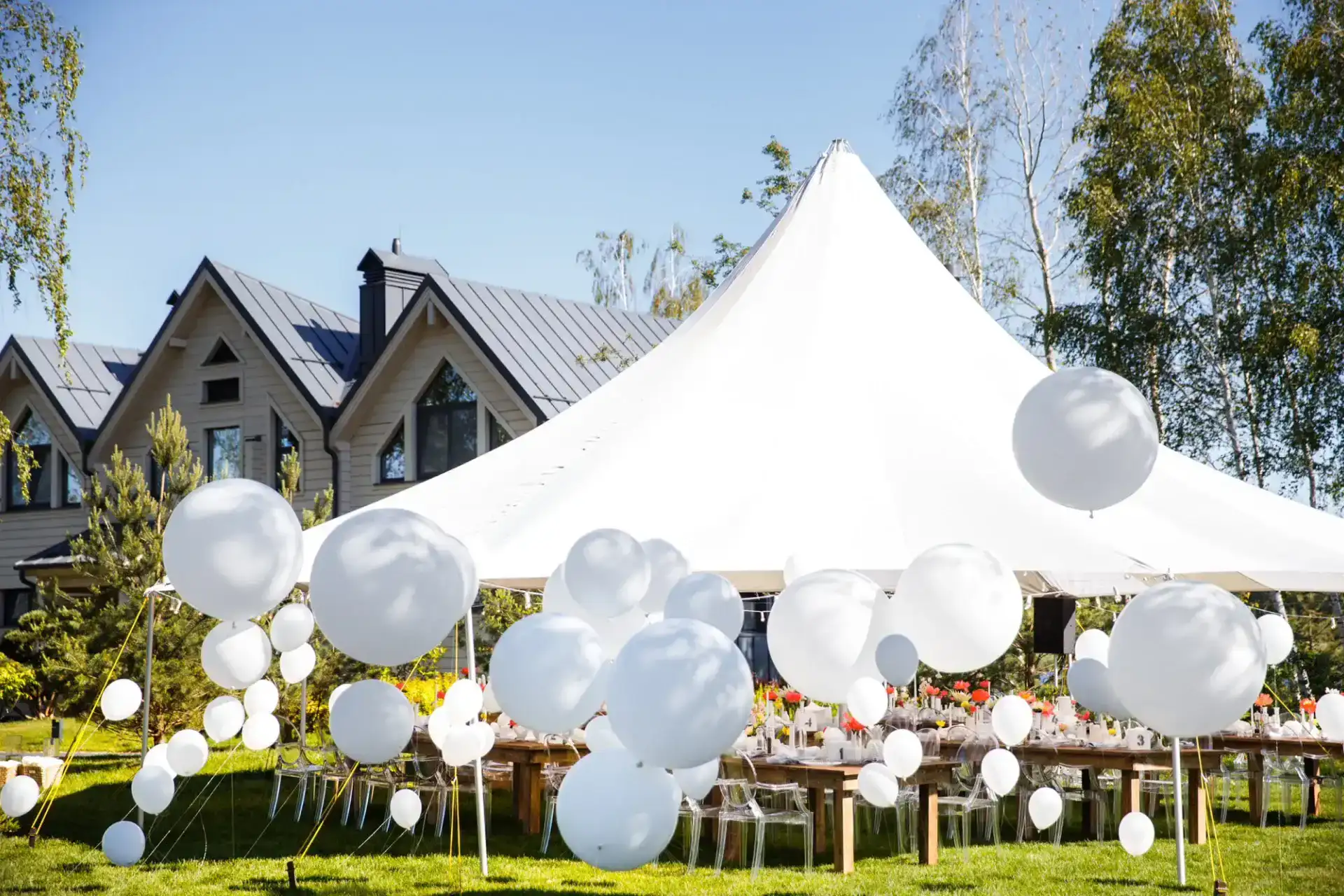
A 10x20 ft pop-up tent anchors the entire package. It provides shade, light rain protection, and instantly makes a backyard feel like an event. It also adds visual value, which helps your listings stand out online.
Altogether, this comes out to around $525 at retail prices. With a bit of deal hunting on Amazon, at Costco or Sam’s Club, or during end-of-season hardware store sales, you can usually get very close to the $500 mark.
Phase 1: Validate demand before you buy anything
One step many guides on how to start a party rental business skip is market validation. Buying equipment first and hoping customers show up later is risky.
Instead, test demand before you spend your money. This step is often overlooked, but it is one of the smartest things you can do when learning how to start a party rental business with a limited budget.
Do the Facebook Marketplace test
Search for “table and chair rentals” within a 20-mile radius of your home. If you see multiple listings, that is a good sign because it means people are already looking there. If you see very few, you may have found an underserved local market.
Check availability
To go a step further, message a few existing sellers late in the week and ask if they are available for the upcoming weekend. If they are already booked, you have found proof of demand. A sold-out competitor is one of the strongest signals you can get.
Phase 2: The advantage of starting from home
One of the biggest benefits of this model is that you can run it entirely from home. No warehouse. No storefront. No monthly rent eating into your profits.
Storage made easy
A big reason this “party in a box” package works so well is its small footprint. A 10x20 pop-up tent folds down into a roller bag about the size of a golf bag. That bag, along with three folded tables and a stack of 18 nesting chairs, fits neatly into a standard garage.
If you do not have a garage, this entire business can be stored in a garden shed or even a large walk-in closet inside your house. You have zero overhead costs for storage, which keeps your profit margins high. Keeping storage simple is one of the key ways this model stays affordable and scalable in the early stages.
Transport without special vehicles
This starter package is designed to work with the vehicle you already own. With the rear seats folded down, the full setup fits into most mid-size SUVs or minivans. There is no need for a box truck, pickup truck, or trailer when you are just getting started.
This allows you to service customers using the vehicle you already drive daily. You save money on insurance, fuel, and vehicle maintenance by using what you already own. Fewer vehicles, fewer logistics, and fewer expenses mean you can focus on bookings instead of overhead.
Phase 3: Building a digital storefront
Even though you are starting small with a single vehicle and a home garage, you should not look small to your customers.
In the rental industry, trust is everything. Customers are often hesitant to hand over money to someone they found on a classified site who has no website, no reviews, and no clear rental process. They worry you will not show up on the day of their child’s birthday party, or that the equipment will not be what they expected.
Why trust matters in rentals
Unlike other small businesses, party rentals are time-sensitive. Customers do not just want tables and chairs. They want peace of mind that everything will arrive on time and in good condition.
If you are relying only on Facebook messages and manual cash payments, some customers may hesitate, even if your pricing is great.
Launch a professional website with Booqable
The easiest way to close that trust gap is by launching a professional website using Booqable. It gives you a real online storefront where customers can view high-quality photos of your package, read item specifications, and check real-time availability.
Even if you are still running your business from home, your website makes your business look established and reliable.
Add online booking and a live calendar
When customers see a “Book now” button and a live calendar, they immediately feel more confident. They can quickly check availability and book without waiting for back-and-forth messages.
It also helps you stand out from casual Marketplace listings and gives you the confidence to charge full market rates.
Protect your equipment with deposits and payments
On top of that, rental software protects your equipment. You can accept credit card payments and security deposits upfront, automate your rental agreements, and keep customer details organized.
If something comes back damaged, you already have a clear record of the booking and a payment method on file. That avoids awkward conversations and makes your business feel professional from day one.
Phase 4: Pricing your first package
Pricing does not need to be complicated when you are starting out.
Recommended rental rate
Lee recommends pricing the full package at around $150 per weekend rental. For customers, this is far cheaper than booking a venue. For you, it leaves room for healthy margins.
Delivery and setup fees
On top of the rental price, charge for your time and fuel:
-
$50 for drop-off and setup
-
$50 for pickup and takedown
Many customers happily pay this for convenience. You can also offer options, such as driveway drop-off only or full backyard setup, depending on how hands-on you want to be.
Return on investment
At $150 for the rental plus $100 for delivery, you earn $250 per booking. With a $500 startup cost, your equipment pays for itself in just two to three rentals. After that, your profits can be reinvested into growth.
Phase 5: Reinvest, do not rush
This business model works because it grows at its own pace.
Month one: focus on bookings
If you rent your package every weekend for one month, you can generate around $1,000 in revenue. It is tempting to take that money immediately, but reinvesting it will grow the business much faster.
Month two: duplicate success
Use those profits to buy a second identical package. Now you can handle two bookings per weekend, doubling your earning potential without adding much extra work.
End of season: upgrade smartly
At the end of the busy season, Lee recommends selling your starter equipment. Party rental gear holds value surprisingly well, and you can often recover 60% to 70% of what you paid.
Combine that resale money with your profits to upgrade to higher-end inventory, such as marquee tents, resin chairs, and professional tables. This opens the door to weddings, corporate events, and premium pricing in year two.
A quick note on insurance and upkeep
Even a small rental business should plan ahead.
Insurance basics
General liability insurance is a smart baseline. It protects you if someone is injured or property is damaged. Costs vary by location and inventory size, but basic coverage is often affordable for small operators.
Maintenance and cleaning
Build simple checks into your routine. Clean items after every rental, inspect for damage, and factor maintenance time into your pricing. Well-maintained equipment lasts longer and keeps customers happy.
Start small, grow intentionally
Learning how to start a party rental business is not about buying the most equipment or having the biggest truck. It is about buying the right equipment, items that pay for themselves quickly and are easy to manage.
If you are serious about how to start a party rental business, this is one of the simplest ways to build momentum without debt or unnecessary overhead.
By starting with a $500 package and operating from home, you dramatically lower the risk. You are not betting everything on day one. You are building momentum, one booking at a time.
That is how sustainable rental businesses are built, and how small beginnings turn into serious opportunities.